
Burnham’s assisted dying warning gains new urgency
as Government equality impact assessment warns women from ethnic minority backgrounds could seek assisted dying to escape domestic abuse - in disproportionate numbers
RELEASE: 2nd September 2026
The Prime Minister’s warning about debating assisted dying while people cannot get the palliative and end-of-life care and support they need has taken on new urgency after the new Government equality impact assessment has warned that abuse, financial hardship and poor access to care could result in some women having an assisted death to avoid financial hardship or escape abuse.
The Government’s recently released equality impact assessment of the assisted dying Bill tabled by Lauren Edwards MP has outlined that poverty, poorer healthcare, lower-quality care and domestic abuse may leave people from ethnic-minority backgrounds more vulnerable to succumbing to coercion and pressure to die.
The assessment specifically highlights the disproportionate domestic abuse experienced by Black and Asian women, combined with high rates of poverty, poorer healthcare access, and lower-quality care faced by people from ethnic minorities. This has accentuated the problem that Andy Burnham raised when he said that palliative and social care needed to be properly funded before Parliament returned to assisted dying. He said it would be “very challenging” to hold that debate while people were not receiving the care they needed or the peace of mind that it would be available.
The Government’s report warns that these pressures could lead to “disproportionate numbers of ethnic minority people choosing to have an assisted death to avoid financial hardship or escape abuse."
This is the first time that the Government has truly acknowledged that there could be at least some domestic abuse victims pushed into assisted death who would not have chosen it otherwise.
The equality impact assessment records that an estimated 2.2 million women experienced domestic abuse in the year ending March 2025, compared with 1.5 million men. This makes domestic abuse a central women’s safeguarding issue for the Bill; any system assessing requests for assisted death would have to be designed around the fact that large numbers of women live with abuse.
These figures are likely to be an underestimate. The UK has only recently begun to collect any data on domestic abuse in older adults (75+), and there has never been official national statistics on this. Last year, The Other Half warned Parliament to plan for 1 in every 7 of those coming forward to be a victim of elder abuse. They must be identified before death.
The Government's report recognises that healthcare professionals may lack training on domestic abuse and may be unwilling to discuss it with patients. This matters because the Bill relies on doctors and an assisted dying panel to decide whether a request is voluntary. The assessment cannot show how reliably they would identify abuse that may be hidden behind a partner’s apparent care and support.
As a result of the huge uplifts in projected assisted deaths, doctors and assessing panel members will be under enormous pressure, reducing the likelihood of being able to successfully identify domestic abuse, coercive control and financial abuse in every case.
The impact assessment released at the end of August raises the central Year 10 projection from 2,183 to 3,502 assisted deaths a year compared with the last impact assessment on the almost identical Leadbeater Bill, an increase of 60%. Its high scenario is 6,257 deaths and the assessment says this should not be treated as an upper limit. Can anyone seriously say that the relevant assessors will have the time and expertise to ensure that coercion is absent in every single case?.
Previous research by The Other Half shows why simply relying on recorded histories of abuse would be unsafe. Its study of more than 100 British “mercy killings” and failed suicide pacts found that 88% of those responsible were men and that 78% of the women killed were not terminally ill. Most cases had no recorded history of domestic abuse, even when examined with hindsight. That hindsight included review by coroners, who, because assisted deaths have been redefined as not "unnatural" under the Bill, will not investigate such deaths by default.
This shows how easily control and violence can be hidden beneath claims of compassion. If abuse was not recognised even after a woman had been killed, Parliament should not assume that it will always be found during an assessment conducted before an assisted death.
In separate evidence submitted to Parliament, The Other Half estimated that between 500 and 1,400 domestic abuse victims could receive an assisted death each year if uptake in England and Wales followed the pattern seen in Western Australia. This shows the possible scale for which safeguarding services, independent advocates, safe accommodation and post-death scrutiny may need to be prepared.
The public also expects practical protections. In MRP polling of 10,222 people, a majority in every constituency in Great Britain said extra care should be taken to protect domestic abuse victims.
The same polling found that a majority in every constituency wanted universal end-of-life care introduced before assisted dying was legalised, with 61% supporting this nationally.
Quote for publication
Fiona Mackenzie MBE, CEO of The Other Half, said:
“Andy Burnham was right to raise the problem with even debating assisted death law while social and palliative care is not available to all."
"A decision to die cannot be called free if someone cannot get the care they need or escape the person abusing them.”
“The Government’s own report says some people may choose assisted death to escape domestic abuse or financial hardship. It specifically points to the greater incidence of abuse experienced by Black and Asian women, and that they may be disproportionately represented in these wrongful ‘assisted’ deaths.”
“Not everyone is in control of their life. The person driving a terminally ill woman to appointments, speaking to doctors or ‘helping’ her make decisions may be the person she is frightened of. It may be that her illness means she can no longer care for the family and is no longer of use to her abusers, who may seek to exploit any gap in the law.”
“There is no ‘free’ choice if care and safety are not available. Before Parliament considers changing the law, women must be able to get proper palliative care, social care and somewhere safe to escape abuse.”
___________
The Other Half is a centre of research for practical, workable policy in the interests of women – theotherhalf.uk.
For further information or interview requests, contact press@theotherhalf.uk
Our Work on Assisted Death
-

POLLING: Mega poll on assisted death
June 2026. Ahead of attempts to revive Leadbeater’s assisted death Private Member’s Bill, we polled more than 10,000 Brits. This largest ever poll on the Leadbeater Bill finds a majority reject its terms: on eating disorders, removal of coroners, families not being told, and doctors raising death. Fewer than 1 in 10 want their MP to prioritise this Bill.
-
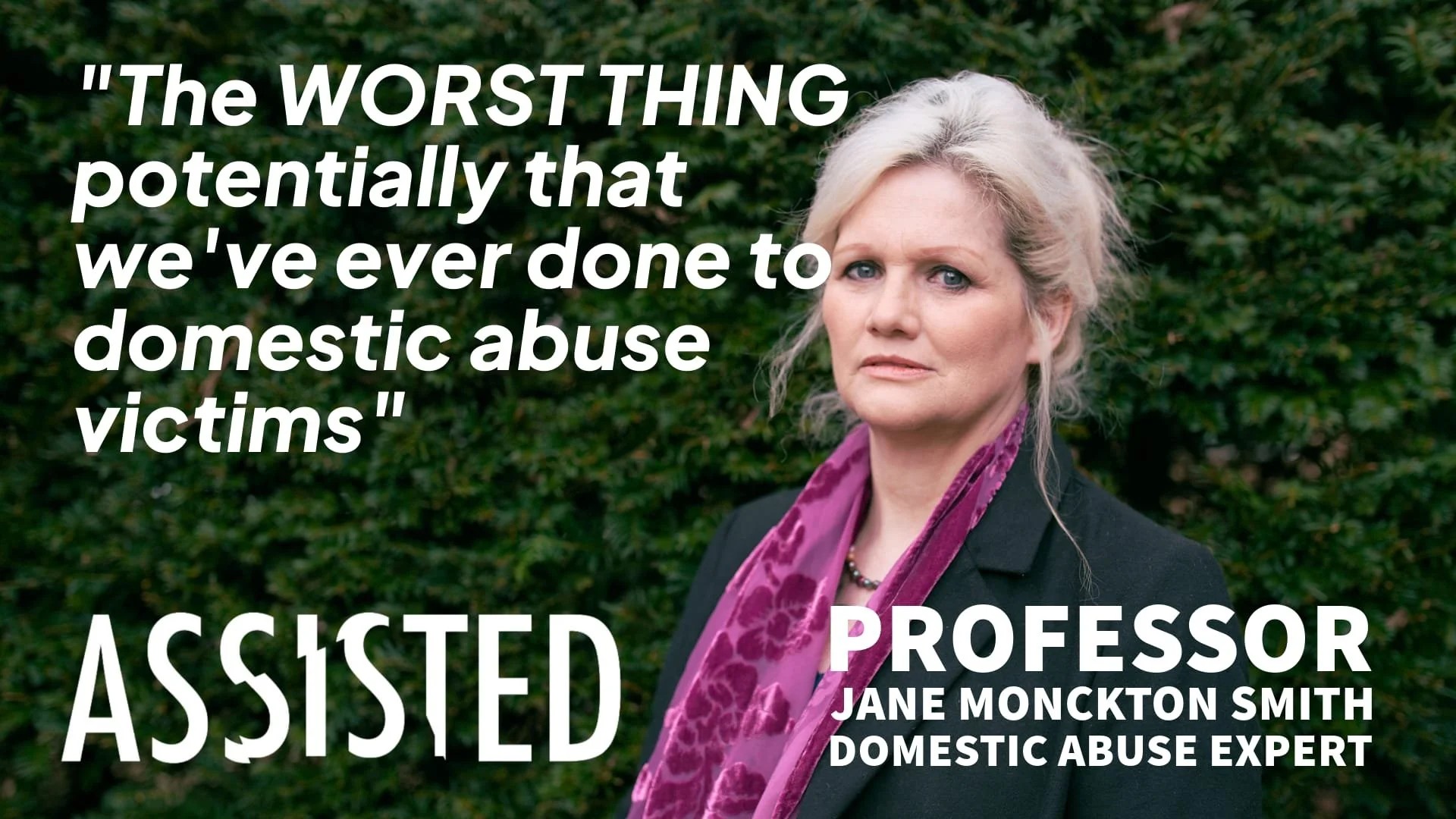
"the worst thing, potentially, that we've ever done to domestic abuse victims
Professor Jane Monckton Smith knows coercive control - she’s one of our foremost experts on domestic homicide. Here why she thinks the Assisted Dying Bill will leave a terrible legacy
-

EVIDENCE: 1400 Victims
Our written evidence for the Assisted Dying bill committee at Westminster. We estimate 1400 domestic abuse victims will die by assisted suicide each year, presenting profound challenges for our society.
-

The Killers
One 1980s campaign tried to transcend Dying: to escape dependence, and eliminate suffering. Instead, terrible and material harms resulted. We meet the killers.
Join us on our Substack for first look at new podcast episode and a deep dive into the forgotten history of progressive movements.
-

PODCAST: Assisted Death and Women
We hear from the experts from here and abroad on the ways that women will be most affected.
-

REPORT: Safeguarding Women in Assisted Dying
Parliament is now debating assisted suicide for the terminally ill. This report looks at ‘assisted’ deaths here and abroad, to highlight the unacceptable risk that women are coerced into state death.
-

POLLING: British public overwhelmingly concerned about domestic abuse victims being coerced into assisted death - and we set out the scale of the risk.
June 2025. 69% of 2,091 adults say they are concerned that lawful assisted death can result in terrible outcomes: and we warn MPs that hundreds of victims to die each year
-
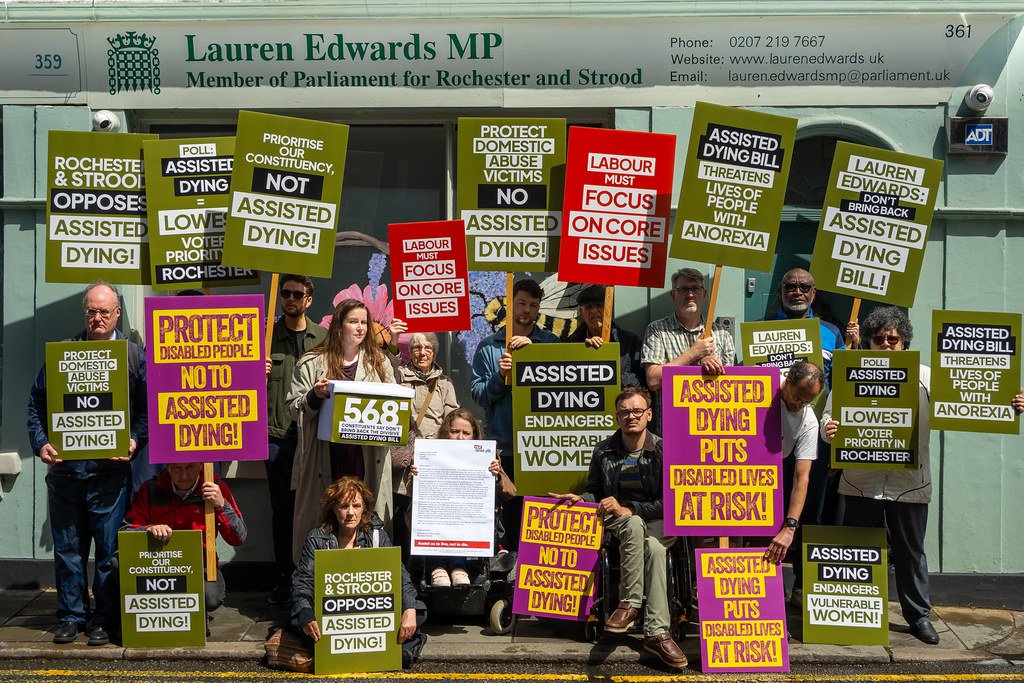
Lauren Edwards MP's constituents say think again on PMB
Rochester residents, disability charities and more gather to deliver community petition to Lauren Edwards MP, signed by over 550 against bringing back “assisted dying” bill